
The Launchpad Illusion: Why “Vetted” Projects Often Fail
March 12, 2026Abstract
The cryptocurrency industry has long relied on a vetting process, typically involving smart contract code audits, venture capital (VC) backing, and launchpad endorsements, as a primary proxy for safety. However, the systemic collapse of high-profile, “vetted” projects like Terra (LUNA) and FTX, alongside thousands of smaller ecosystem failures, suggests that traditional due diligence in Decentralized Finance (DeFi) is fundamentally insufficient. This paper explores “The Launchpad Illusion,” positing that the current vetting model prioritizes technical and financial formalities over operational practicality, market discoverability, and long-term utility.
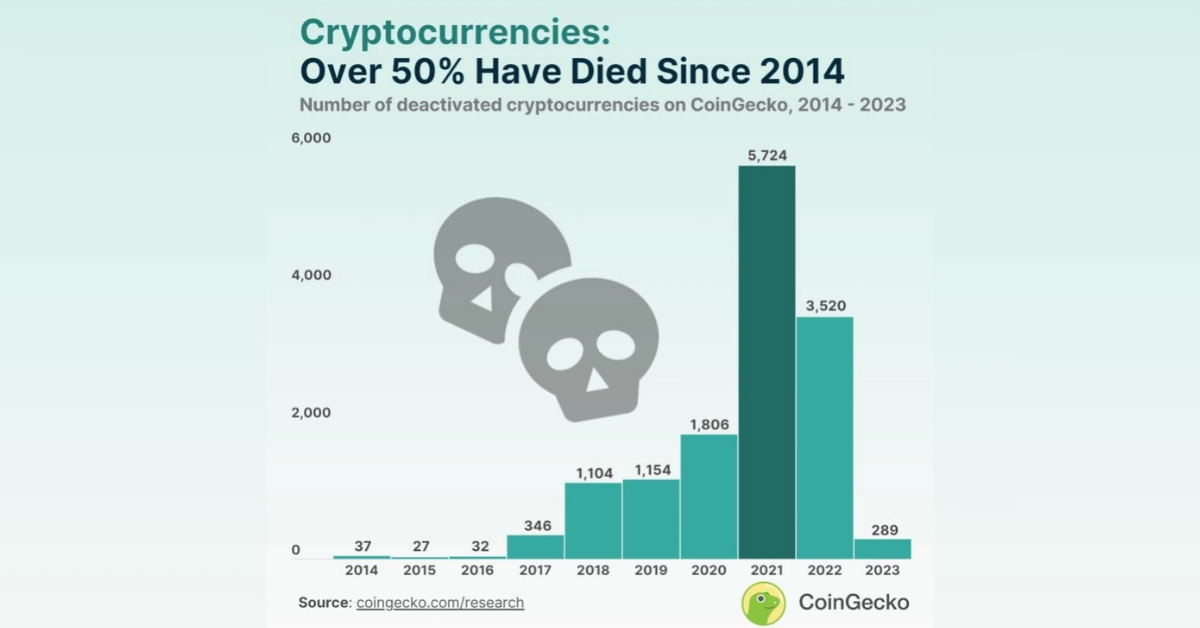
Drawing upon recent data, including a comprehensive CoinGecko study revealing that over 50% of all cryptocurrencies listed since 2014 have failed, and a proprietary 2026 dataset tracking 847 failed blockchain startups, this research identifies a critical disconnect between a project’s whitepaper and its real-world adoption. Furthermore, it highlights the emerging role of mainstream search engine “discoverability” as the primary arbiter of institutional success and longevity in the decentralized economy.
Introduction
In the early days of the blockchain boom, the primary risk to retail investors was the “rug pull”, a malicious scam where anonymous developers vanished with the liquidity pool. To combat this wild west environment, the industry introduced launchpads and Initial DEX Offerings (IDOs). These centralized or semi-decentralized platforms promised to “vet” projects before offering them to the public. They acted as gatekeepers, ensuring that a project had audited smart contracts, a public (doxxed) team, and a structured roadmap.
Yet, despite these institutional-grade safeguards, the failure rate remains staggering.
A landmark study by CoinGecko found that of the over 24,000 cryptocurrencies listed on their platform since 2014, more than 14,000 (over 50%) are now classified as “dead” or failed. A significant portion of these casualties, over 7,500 coins, originated from the highly vetted, VC-backed 2020-2021 bull market.
This phenomenon suggests that vetting creates an illusion of security that obscures deeper, systemic risks. Investors naturally tend to choose established projects to decrease risk, yet the perception of a “vetted” newcomer often leads to capital being concentrated in fundamentally fragile ecosystems that ultimately collapse under market pressure.
Source: coingecko.com
The Anatomy of “Vetted” Failures: Insights from History
To understand why vetted projects fail, we must look at the largest collapses in crypto history. In each of these cases, the projects were considered “blue-chip,” heavily audited, and backed by the most prominent Venture Capital firms in the Web3 space.
Terra (LUNA/UST): Flawed Tokenomics and the Death Spiral
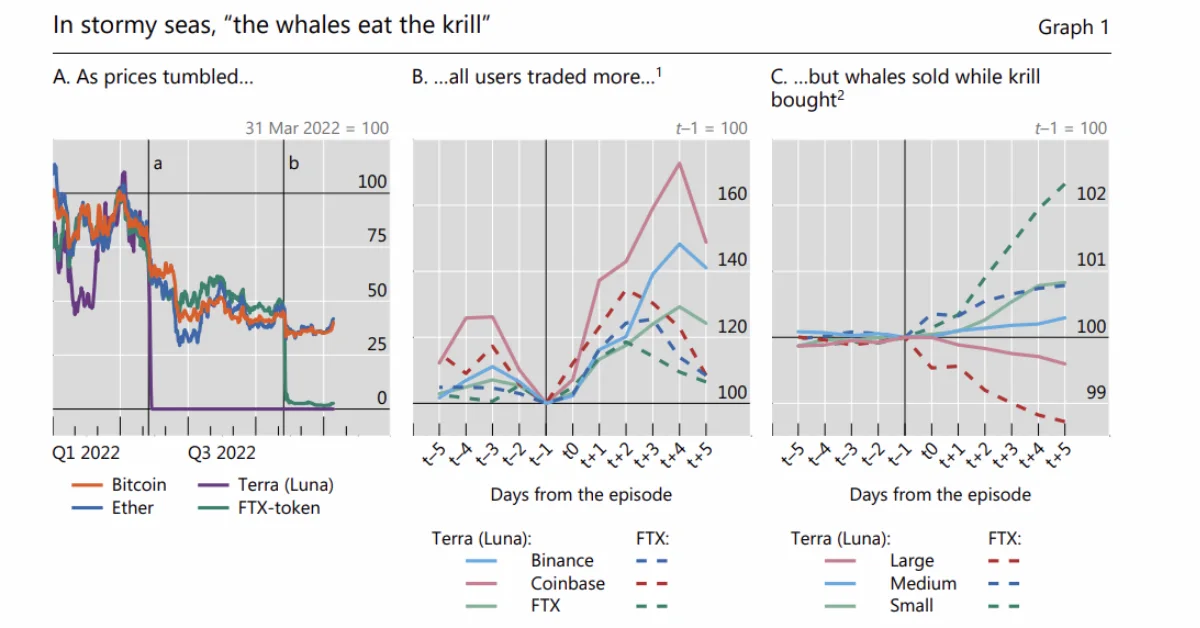
Terra was a top-10 ecosystem with a peak market capitalization of roughly $60 billion. It was universally vetted and celebrated. However, its stablecoin (UST) was algorithmically-backed, not by fiat reserves, but by its sister token, LUNA. When market confidence dipped, a bank run occurred. The protocol’s tokenomics (economic design) forced the hyper-inflation of LUNA to save the UST peg, driving the supply to trillions and the price to zero in a textbook “death spiral.”
FTX and Alameda Research: Fraud and Mismanagement
FTX was once considered the most “regulated” and vetted cryptocurrency exchange globally, championed by politicians and institutional investors alike. The failure here was a classic hole in the balance sheet. The doxxed and vetted founder, Sam Bankman-Fried, illegally diverted customer funds to bail out his sister trading firm, Alameda Research. Audits failed to catch this because the vetting focused on the platform’s trading engine, not its shadow accounting.
Three Arrows Capital (3AC): Over-Leverage and Contagion
A massive, highly respected crypto hedge fund that managed billions. They borrowed heavily to make risky bets across the DeFi sector. When the market dipped-catalyzed by the Terra collapse-they could not meet their margin calls, triggering a massive, industry-wide contagion that wiped out billions in Total Value Locked (TVL).
Celsius Network: Unsustainable Yields
Celsius marketed itself as a secure crypto lending platform, offering users high Annual Percentage Yields (APY). They passed numerous security audits. However, they were generating these yields through highly risky, illiquid investments. When the bear market hit, and users rushed to withdraw their funds, Celsius became insolvent, froze withdrawals, and declared bankruptcy.
Mt. Gox: The Original Security Failure
Handling 70% of all Bitcoin trades in 2014, Mt. Gox was the undisputed industry leader. Despite its vetted status, it lost 850,000 BTC to a multi-year hack that went entirely unnoticed by management due to a lack of operational security and proper internal auditing.
The Practicality Gap: Strong on Whitepaper, Weak on Utility
One of the most persistent reasons for the failure of modern vetted projects is the Practicality Gap. A project can possess a technically flawless whitepaper, complete with complex game theory, innovative consensus mechanisms, and scalable decentralized infrastructure, yet fail to solve a single real-world problem.
Lack of Real-World Adoption
Vetting processes typically focus on the feasibility of the technology rather than its utility. For example, a project founded by elite cryptography engineers might pass every technical audit with flying colors. However, if the user interface (UI) is inaccessible to the average user, or if the network requires exorbitant gas fees to execute a simple smart contract, the project will fail to achieve real-world adoption.
A textbook example of this is Cardence.io ($CRDN). Launched in 2021, Cardence was a vetted “multi-chain decentralized presale platform”. It had a strong whitepaper and positioned itself as the premier IDO launchpad for the Cardano blockchain. However, it relied entirely on ecosystem hype. When Cardano’s DeFi adoption moved more slowly than anticipated, the demand for a dedicated launchpad evaporated. Without a steady stream of utility, the token lost its liquidity, eventually becoming a “dead coin.”
Many projects focus on “building for the sake of building.” They create hyper-specific solutions for problems that only exist within the crypto vacuum, such as optimized yield aggregators for illiquid governance tokens. When the bull market ends, these platforms see their Total Value Locked (TVL) drop to zero because they lack external, real-world revenue generation.
The Anonymity Paradox
There was a time in crypto when anonymous teams were almost always scammers. That’s not the case anymore. In fact, some DeFi projects, in their efforts to be as decentralized and censorship-resistant as possible, might require anonymity to ensure their long-term existence. Therefore, projects that reveal real, “doxxed” developers are not necessarily better projects. A public face provides legal recourse, but it does not prevent bad management, roadmap misalignment, or a fundamentally flawed economic model.
Poor Execution and Roadmap Misalignment
Even with a strong initial concept and a successful IDO, many vetted projects collapse due to poor execution. Vetting is merely a snapshot in time; it certifies the project’s state at launch, not its operational resilience over the following years.
Once a project secures millions in venture capital, teams often suffer from “Roadmap Drift.” They promise a sprawling ecosystem-a Layer-1 Mainnet, a decentralized autonomous organization (DAO), a Web3 gaming metaverse, and a mobile wallet-to secure launchpad interest. The technical debt of these promises quickly becomes insurmountable. Teams pivot away from their original, viable value proposition to chase the latest market narrative, leading to a bloated, undeliverable roadmap. Investors, seeing the misalignment between the whitepaper promises and actual execution, withdraw their liquidity, leaving the project to slowly bleed out.
The Discoverability Paradox: The 847 Project Dataset
While tokenomics and execution are critical, groundbreaking analysis from the 2024–2026 market cycles has shifted the narrative on why projects fail.
Since 2024, one crypto marketing professional has tracked why blockchain projects fail. After watching numerous promising startups disappear within months, the user began documenting cases in a spreadsheet. By early 2026, the dataset had grown to 847 projects, revealing a pattern that challenged common assumptions about failure in the crypto industry.
Initially, the expectation was that projects collapsed due to weak technology, poor tokenomics, rug pulls, or a lack of community. However, the data suggested a different primary cause: discoverability. In many cases, projects simply could not be found through credible sources when it mattered most. The detailed analysis was posted by the user on Reddit.
The “Google Filter” in Institutional Review
According to the user’s contacts working at major centralized exchanges (CEXs), listing applications often begin with a simple search engine query. Before an analyst reviews a whitepaper, a GitHub repository, or a smart contract audit, they check whether the project appears in reputable financial media outlets such as Yahoo Finance, CoinDesk, Bloomberg, or MarketWatch.
Projects that only appear on forums, personal blogs, Reddit threads, or Medium posts are often filtered out quickly. To a compliance officer or institutional investor, a lack of mainstream media footprint signals a lack of legitimacy, regardless of the project’s technical merits.
Case Study: The PhD vs. The PR Strategist
The dataset perfectly illustrates this dynamic through two comparable DeFi protocols launched during the same quarter:
- The Technical Failure: One protocol was founded by a cryptography PhD. Despite possessing highly advanced, audited technology and a massive $180,000 marketing budget focused entirely on crypto influencers and X (formerly Twitter) community growth, the project failed within four months. Its token fell 82%, CEX listing applications were repeatedly rejected, and venture capital firms declined follow-up meetings. A search of the project’s name revealed no coverage in recognized publications-only forum discussions, Discord links, and self-published blogs.
- The Discoverable Success: A comparable project launched simultaneously with similar technology, but a significantly smaller $50,000 total budget. Early in its launch, the team allocated a few thousand dollars specifically to public relations and press distribution, securing organic coverage across Yahoo Finance, CoinDesk, and traditional market aggregators. Influencer campaigns were treated as a secondary priority. Within weeks, the project secured a Tier-1 exchange listing and successfully closed a Series A funding round.
Across the tracked dataset of 847 projects, startups that received early coverage in major financial publications showed significantly higher rates of exchange listings, funding success, and faster community growth. The underlying reason appears straightforward: investors, exchanges, and large token holders (whales) frequently research projects through search engines. When credible coverage appears in results, it signals institutional legitimacy. Without it, projects appear indistinguishable from countless short-lived, speculative ventures.
The analysis strongly suggests that many crypto startups prioritize short-term social media exposure and influencer hype while entirely overlooking the long-term credibility created by established financial media visibility.
Source: bis.org/publ/bisbull69.pdf
Fundamental Best Practices for Evaluation
While there are no guarantees of success in this highly volatile industry, there are fundamental best practices that investors, venture capitalists, and developers can apply when evaluating a new piece of technology. The “vetted” label should be the baseline, not the conclusion.
Assess Real Revenue vs. Token Emissions
A sustainable project generates real yield from actual usage (e.g., transaction fees, software-as-a-service models). If a project’s APY is solely funded by printing and distributing its own native token (emissions), it is mathematically guaranteed to dilute its market capitalization over time.
Evaluate the Media Footprint
Does the project exist outside the Web3 echo chamber? Search the project’s name. If it only exists on Telegram, X, and Reddit, it carries a massive discoverability risk. Look for coverage in traditional, vetted financial media.
Demand Practicality over Complexity
A project must solve a real-world problem with less friction than the legacy system it aims to replace. If a decentralized application (dApp) requires a 15-step process and $40 in gas fees to execute a $10 transaction, its whitepaper promises are irrelevant.
Monitor Liquidity Depth
A project’s market capitalization is a vanity metric if its liquidity is shallow. Look at the ratio of liquidity pool (LP) depth to the total market cap. If a large holder selling 5% of the supply crashes the price by 50%, the project is fundamentally unsafe, regardless of its audit status.
Look for Genuine Utility in the Tokenomics
Ask a simple question: “Does this project actually require a proprietary blockchain token to function, or could this software run on a traditional database?” If the token only exists to raise funds, the project will likely fail once the initial hype subsides.
Conclusion
The “Launchpad Illusion” is the dangerous misconception that a project’s long-term survival is guaranteed by its initial entry requirements. As the data from the past five years clearly demonstrates, passing a smart contract audit or securing a launchpad IDO does not insulate a project from the harsh realities of the open market.
Projects fail because they are strong on theory but weak on practicality. They fail because roadmaps drift and management executes poorly. But most surprisingly, as recent data from 847 failed startups reveals, they fail because they remain invisible to the institutional capital that drives long-term sustainability.
To survive the maturation of the cryptocurrency industry, projects must move beyond the narrow metrics of crypto-native vetting. Legitimacy is no longer granted by a launchpad; it is earned through transparent execution, the creation of genuine utility, and the strategic foresight to build a discoverable, credible footprint in the broader financial world. People will always gravitate toward established projects to decrease risk, and the only way a new project can become “established” is by surviving the scrutiny of both the blockchain and the traditional search engine.
References
- Bank for International Settlements (BIS). (2023). Crypto shocks and retail losses. https://www.bis.org/publ/bisbull69.pdf
- https://www.reddit.com/r/CryptoMarkets/comments/1r65i7v/ive_been_tracking_why_crypto_projects_fail_since/
- CoinGecko Research. (2024). Dead coins: How many cryptocurrencies have failed? https://www.coingecko.com/research/publications/how-many-cryptocurrencies-failed
- CryptoNews. (2025). Over 3.7 Million Crypto Tokens Suffered Collapse Between 2021 and 2025. https://cryptonews.com/news/over-3-7-million-crypto-tokens-suffered-collapse-between-2021-and-2025-report/
- TradingView / NewsBTC. (2024). By The Numbers: How Many Altcoins Died In The Past 10 Years, Report Shows. https://www.tradingview.com/news/newsbtc:477ddb777094b:0-by-the-numbers-how-many-altcoins-died-in-the-past-10-years-report-shows/